Analysis
Sorghum vs plastic: which pays off for retail
A plastic broom is cheaper at the door — that is the first thing a buyer sees. But a shelf does not live on landing cost alone. Once you factor in margin, returns and what shoppers actually put in the basket, the natural sorghum broom looks different. Let us go through it point by point, no slogans.
What the shopper reaches for
Demand for natural goods in Europe has been climbing for years, and it is no longer a niche for eco stores. The ordinary shopper in a chain hypermarket increasingly picks a wooden handle and natural fibre over plastic — the product reads as honest and well made. For a retailer that is a ready merchandising argument: a sorghum broom sells itself next to its plastic equivalent.
Cost and margin
A mass-market plastic broom costs pennies, but it also sells for pennies — the margin is thin and the competition is purely on price. A natural broom lives in a different price tier: shoppers pay more for the "real" thing, so the retailer's markup is higher too. At comparable volumes, a shelf of natural brooms often earns more profit per linear metre than cheap plastic.
Lifespan and returns
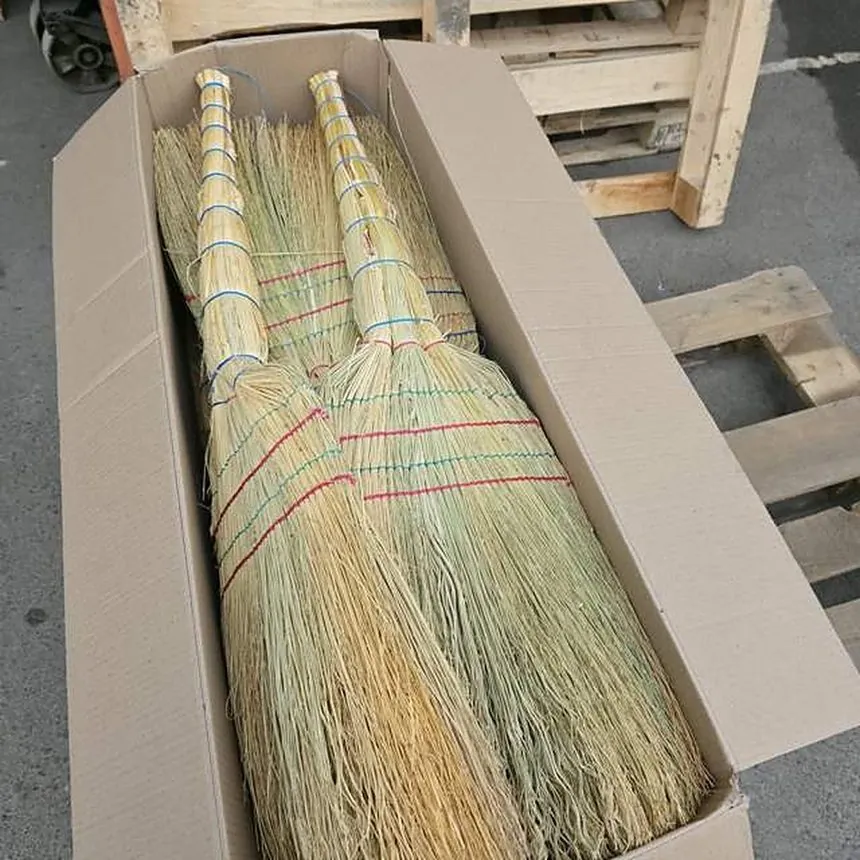
Cheap plastic fails predictably: the handle cracks, fibres drop out, the head goes bald. Every such case is a potential return and an unhappy customer. Tightly bound sorghum does not crumble in normal use and lasts longer. Fewer returns means fewer hidden costs — invisible in the purchase price, but visible in the category report.
Sustainability and retailer requirements
Large retailers are cutting plastic from non-food categories one after another — sometimes a corporate target, sometimes regulatory pressure. Sorghum is 100% biodegradable, sheds no microplastic and covers that agenda without extra "green" certification. For a buyer it is a way to hit the plastic-reduction plan without losing a product in the cleaning-tools category.
What it means for the buyer
Plastic wins on entry price; the natural broom wins on margin, returns and demand. A healthy shelf usually carries both, but the natural share of cleaning tools keeps growing, and it pays to enter it before your competitor does. If you plan a test, start with the fast movers: the classic 3-stitch and braided models cover most of the demand.
Care and shopper perception
There is a myth that a natural broom is fussier to care for. In practice sorghum needs nothing special: do not soak it for long, dry it bristles-up — the same rules as for any quality broom. What it wins on is feel and look: a wooden handle sits better in the hand than plastic, and the fibre looks alive. For the shopper that is a sense of quality worth paying for; for the retailer, a reason to place the product above the bottom price tier.
How to bring natural brooms onto the shelf
You do not have to switch the whole category at once. It is smarter to introduce one or two fast movers next to the plastic and watch the turnover over a couple of months. The classic 3-stitch covers baseline demand; the braided model works as a higher-priced line with better margin. Mixing models in a single shipment lets you test both without bloating stock. From there the decision is made by category numbers — share, margin, returns — not by gut feeling.
It also helps that a natural product does not go out of fashion. Plastic brooms compete on design and price; a natural broom is sold by the material itself, so it needs no seasonal relaunch. For the buyer that is a stable line in the assortment rather than a one-off promotion.
Natural sorghum brooms from Moldova, wholesale from 5,000 pieces, models mixable. We will send samples and a price for your chain.